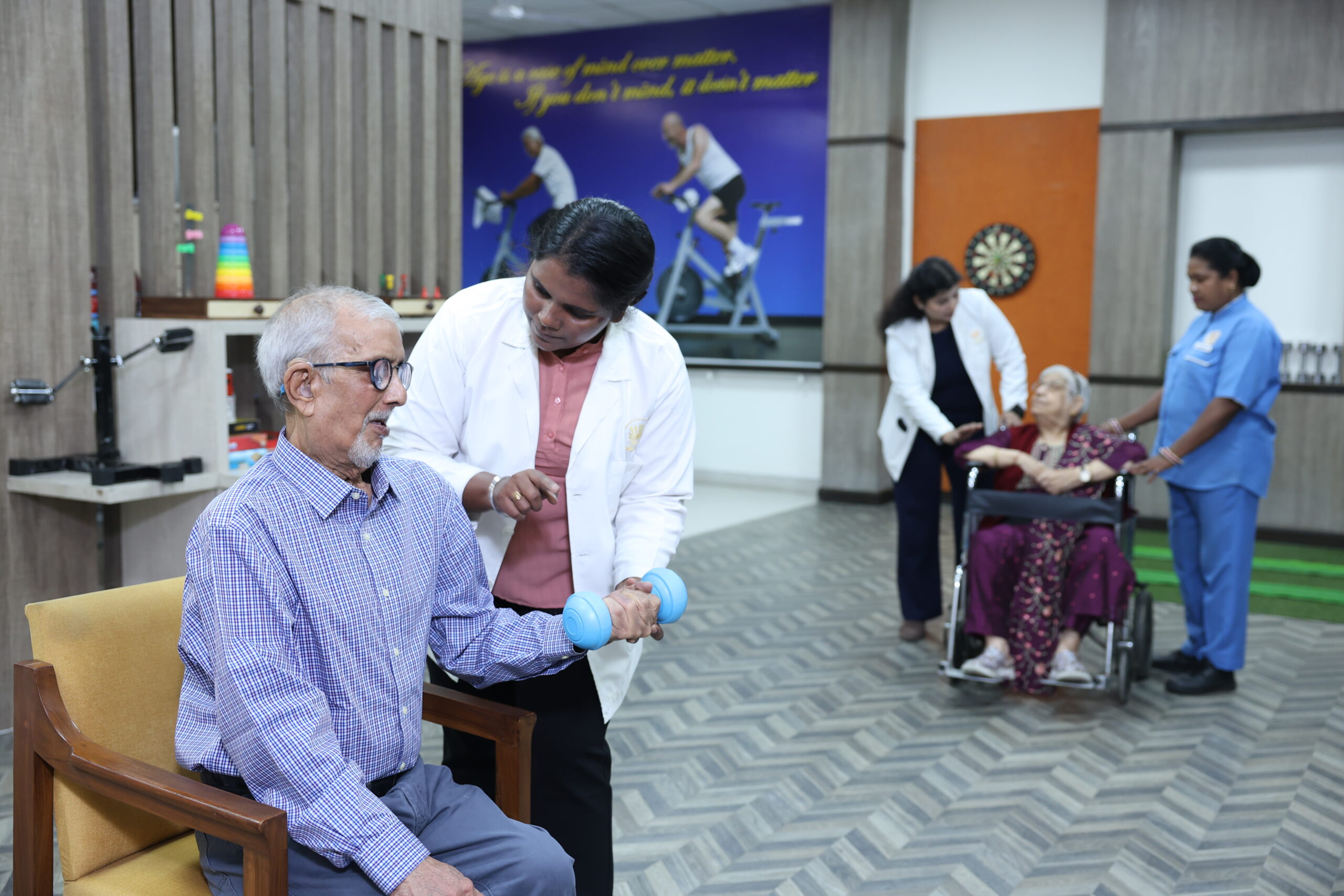
When an elderly person goes through surgery, the first question which comes to the minds of their family members is how long will the recovery take? The truth is, recovery in seniors can be significantly slower due to reduced muscle strength, joint stiffness, and limited mobility. Hence, understanding the right approach to post-surgical care is something which every family needs to be aware of. This is exactly where after surgery exercises come into the picture, playing a vital role in helping seniors regain movement and independence.
On the other hand, recovery does not have to be a lonely or unsafe journey. If your elderly loved one has access to a structured rehabilitation environment, such as a senior living community or assisted living facility, then exercises after surgery recovery become far more effective, thanks to round-the-clock medical supervision and dedicated physiotherapy support. In this article, we will walk you through 30 essential exercises which are specifically recommended for elderly patients on the road to recovery.
Why Post-Surgery Rehabilitation is Important for Senior Citizens
Here is something most families do not realise until they are already in the thick of it. When a senior comes home after surgery, the instinct is to let them rest completely. But prolonged rest without movement is actually one of the biggest mistakes you can make. Muscles waste away faster in older bodies, joints lock up, and what started as a six-week recovery can stretch into months. Facilities that keep a close eye on health, bring physiotherapists to the patient, and provide safe spaces for movement change this picture entirely. Physical therapy exercises after surgery, when done right, deliver results that bed rest simply cannot. Some of those results include:
- Improves blood circulation
- Reduces muscle stiffness
- Restores joint flexibility
- Prevents blood clots
- Improves emotional well-being
Safety Guidelines Before Starting After Surgery Exercises
Any physiotherapist who is handling old age patients will confirm the same. It is not a period to be audacious or impatient during the post surgery period. A 70 year old who manages to endure pain with the hope that it will one day come to an end is far much better off finding his or her way back to recovery than to the hospital. It is about having the right person in the room one who will know when to push and when to pull back. It is exactly this type of peace of mind that the assisted living facilities in Delhi NCR offer to the families by having trained staff on the floor. It is not sufficient to have good intentions, there must be a watchful eye guiding every after surgery exercise. The best exercises to do after surgery are those that are performed step by step. These are the fundamentals that you must consider before your loved one begins any routine:
- Consult a doctor before undertaking any routine.
- Begin with low intensity exercises.
- Use aids such as railings or chairs for support.
- Avoid sudden movements.
- Stay hydrated.
- Stop if pain occurs.
30 Significant Post-Surgery Exercises to Assist Aged Patients
And now that the safety side of it is covered, we may pass to what you are really here for. The post operative exercises below are among the most common exercises that have been prescribed to elderly people who have undergone orthopedic surgery, joint surgery or general surgery. In elderly care communities, the physiotherapists tend to monitor these routines to make sure that all the movements are safe, controlled, and suitable to the specific patient. A read through them will give you a clear picture of what a planned recovery should look like.
| No. | Exercise | Category | Purpose |
| 1 | Deep Breathing Exercise | Breathing and Circulation | Improve oxygen flow and blood circulation |
| 2 | Ankle Pumps | Breathing and Circulation | Improve oxygen flow and blood circulation |
| 3 | Wrist Rotations | Breathing and Circulation | Improve oxygen flow and blood circulation |
| 4 | Gentle Arm Raises | Breathing and Circulation | Improve oxygen flow and blood circulation |
| 5 | Seated Marching | Breathing and Circulation | Improve oxygen flow and blood circulation |
| 6 | Neck Rotations | Flexibility and Mobility | Restore joint movement and prevent stiffness |
| 7 | Shoulder Rolls | Flexibility and Mobility | Restore joint movement and prevent stiffness |
| 8 | Heel Slides | Flexibility and Mobility | Restore joint movement and prevent stiffness |
| 9 | Knee Bends | Flexibility and Mobility | Restore joint movement and prevent stiffness |
| 10 | Hip Rotations | Flexibility and Mobility | Restore joint movement and prevent stiffness |
| 11 | Side Leg Lifts | Flexibility and Mobility | Restore joint movement and prevent stiffness |
| 12 | Gentle Stretching Routines | Flexibility and Mobility | Restore joint movement and prevent stiffness |
| 13 | Straight Leg Raises | Strength Building | Rebuild muscle strength |
| 14 | Chair Sit-to-Stand | Strength Building | Rebuild muscle strength |
| 15 | Seated Leg Extensions | Strength Building | Rebuild muscle strength |
| 16 | Standing Calf Raises | Strength Building | Rebuild muscle strength |
| 17 | Wall Push-Ups | Strength Building | Rebuild muscle strength |
| 18 | Resistance Band Pulls | Strength Building | Rebuild muscle strength |
| 19 | Glute Bridges | Strength Building | Rebuild muscle strength |
| 20 | Supported Mini Squats | Strength Building | Rebuild muscle strength |
| 21 | Heel-to-Toe Walking | Balance and Stability | Improve stability and reduce fall risk |
| 22 | Seated Resistance Band Exercises | Balance and Stability | Improve stability and reduce fall risk |
| 23 | Side Stepping | Balance and Stability | Improve stability and reduce fall risk |
| 24 | Chair Balance Holds | Balance and Stability | Improve stability and reduce fall risk |
| 25 | Gentle Yoga Poses | Balance and Stability | Improve stability and reduce fall risk |
| 26 | Slow Walking Practice | Functional Recovery | Return to everyday activities |
| 27 | Stair Stepping Practice | Functional Recovery | Return to everyday activities |
| 28 | Light Stationary Cycling | Functional Recovery | Return to everyday activities |
| 29 | Water Therapy Exercises | Functional Recovery | Return to everyday activities |
| 30 | Assisted Stretching Sessions | Functional Recovery | Return to everyday activities |
Sample Weekly Exercise Routine for Elderly Recovery
Planning out the week in advance makes a big difference when it comes to after surgery exercises for elderly patients. Rather than doing too much on some days and nothing on others, a structured weekly routine keeps the body progressing at a safe and steady pace.
| Day | Focus Area | Example Exercises |
| Day 1 | Circulation | Breathing, Ankle Pumps |
| Day 2 | Flexibility | Shoulder Rolls, Heel Slides |
| Day 3 | Strength | Chair Squats, Leg Raises |
| Day 4 | Balance | Heel-Toe Walking |
| Day 5 | Strength | Wall Push-Ups |
| Day 6 | Mobility | Light Walking |
| Day 7 | Rest / Stretching | Gentle Stretching |
The thing that is to be remembered most in this case is that post operative recovery exercises are not about restriction. They are about safe movement and the capacity to allow the body to heal itself. It is not fast but gradual progress that will ensure the aged patients are back on their feet for good.
Top Five Mistakes the Elderly Should Not Commit in Recovery.
It is not just what you do but what you do not do when it comes to after surgery exercises. Well-intended mistakes are made by so many families, which in fact slows down the recovery rather than speeding it up. Make sure that your elderly loved one does not experience the following:
- Physical exercise without a prescription.
- Too vigorous exercise at an early stage.
- Ignoring pain signals.
- Late attendance at physiotherapy.
- Lack of supervision.
Conclusion: The Importance of Directed Rehabilitation in the Aged Population.
Post-operative recovery is not something that happens by chance. It happens because the right people, the right environment and the right after surgery exercises all come at the right time. The aged with a well-planned schedule and proper medical care can always achieve faster and improved recovery rates than those who go through the same process without any help.
Should you be in need of exactly such environment in which you wish to support your loved one, then The Golden Estate in Faridabad, Delhi NCR would be worth considering. The residential home provides the residents with regular health check-ups, special physiotherapy services, secure places where the residents can practice rehabilitation exercises, and a sociable community that considers the overall well-being of the residents. The Golden Estate is a specialized senior care facility that has the potential to make a real difference for families that seek more than just basic care.
FAQs
What is the importance of exercises for elderly patients after surgery?
Post-operative exercise will help the elderly to regain their mobility, improve circulation, reduce stiffness, prevent complications, rebuild strength, and make the recovery process faster and safer.
When should elderly patients start exercises after surgery?
Exercises must only begin after the doctor’s recommendation and the elderly must begin with some light exercises which are monitored so as not to strain or harm themselves.
What are the recommended exercises in the postoperative period for the elderly?
The common ones are the breathing exercises, stretching, leg lifts, balance exercises, light walking and physiotherapy to restore strength and mobility.