
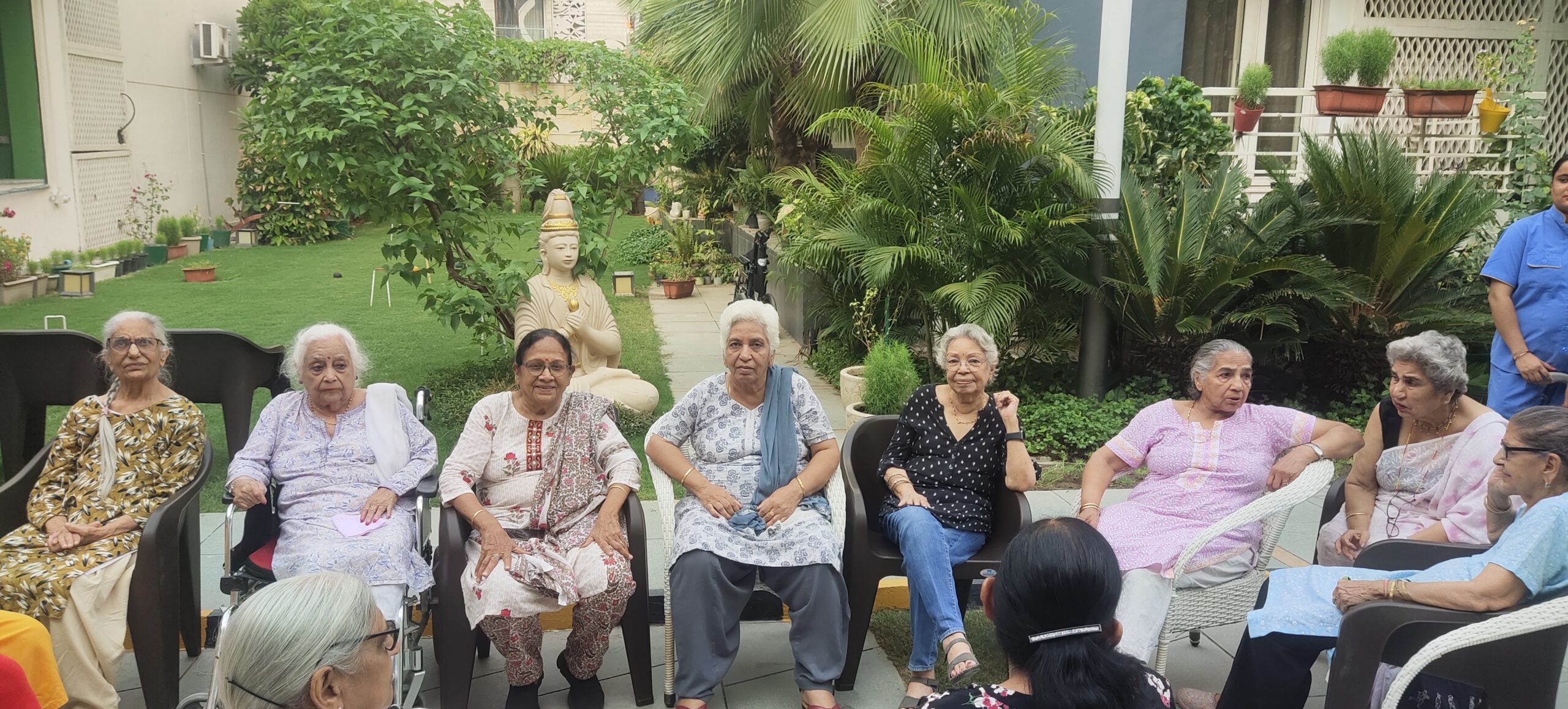
If you are reading this, you are probably weighing a hard question: what will it actually cost to move your parents into assisted living in Delhi NCR, and is it worth it? The honest answer for 2026 is a range, not a number. Quality assisted living across Delhi, Gurgaon, Noida and Faridabad runs from roughly Rs 50,000 to Rs 1,00,000 per month for standard care, with premium and luxury communities going higher, and where a specific family lands inside that band depends on four things you can actually control. This guide breaks down each one, so the figure you eventually hear from a provider makes sense instead of arriving as a shock.
A quick grounding note before the numbers. India now has 153 million people aged 60 and above, and that figure is projected to reach 347 million by 2050, per the UNFPA India Ageing Report. More families than ever are making this decision, which is exactly why the market has spread from charitable old-age homes at one end to seven-star communities at the other. That spread is the reason a single quoted price is meaningless until you know what care level it buys.
What assisted living actually includes (and what it does not)
Assisted living is residential care for seniors who need help with some daily activities but do not require round-the-clock hospital nursing. It sits between two other models, and the cost gap between them is large enough that confusing the three is the most expensive mistake families make.
Independent living is for seniors who manage on their own. They want a secure, age-friendly apartment, company, meals if they choose, and help on call, but they dress, bathe and move without daily assistance. The Golden Estate in Faridabad, for instance, runs Independent and Assisted Living side by side, so a Resident can begin independent and shift to assisted care without leaving the community or the friends they have made.
Assisted living adds personal-care support: help with bathing, dressing, medication reminders, mobility, and supervision, plus prepared meals and on-site medical cover. A Resident here is mostly capable but needs a steadying hand through the day.
Nursing care is the clinical end. It is for seniors with complex, ongoing medical needs, post-stroke rehabilitation, advanced Parkinson’s, or conditions requiring daily skilled nursing. Staff ratios are higher, physician involvement is heavier, and the monthly cost climbs accordingly. Assisted living is not nursing care, and a good provider will tell you honestly when a parent’s needs have crossed that line.
Here is the practical test. If your parent can largely run their own day but you lie awake worrying about a fall in the bathroom or a missed dose, assisted living is the bracket you are pricing. If they need medical intervention every single day, you are pricing nursing care, which costs more.
The four things that decide your monthly bill
A senior-living quote is not one price. It is a stack of components, and providers bundle them differently, which is why two homes quoting “Rs 80,000” can mean very different things. These are the four levers.
1. Accommodation type. The single biggest variable. A shared twin room costs far less than a private studio, which costs less again than a furnished one-bedroom suite with a sitting area and attached balcony. At The Golden Estate, suites & studios are fully furnished and air-conditioned, the kind of private accommodation that sits at the upper end of the room spectrum rather than a dormitory bed.
2. Care level. An independent Resident who needs only meals, housekeeping and emergency cover pays the base rate. Add daily personal-care assistance and the figure rises. Add memory care for dementia and it rises again, memory-care units typically add Rs 15,000 to Rs 30,000 per month over the base in Delhi NCR. You pay for the hours of human attention your parent actually needs, no more and no less, which is why an honest care assessment before you sign matters more than the headline rate.
3. What is bundled in. Read the inclusions line by line. Premium communities fold meals, housekeeping, laundry, 24×7 security, recreation, physiotherapy and basic medical cover into one monthly figure. The Golden Estate’s package, for example, includes freshly prepared meals, laundry and housekeeping, an in-house physiotherapist and psychologist, a spa, gym and clubhouse, and 24×7 medical support, all inside a fully gated community. Cheaper homes quote a low base and then bill meals, nursing and physiotherapy on top. The all-inclusive number often turns out fairer than the low one once you add the extras back.
4. Deposit and payment structure. Most established communities take a one-time refundable security deposit, often several lakh rupees, separate from the monthly fee. Some premium projects use a larger lifetime-lease or buy-in model instead of pure monthly rent. Always ask two questions: how much is the deposit, and how much of it comes back when a Resident leaves? The answer changes the true cost more than most families expect.
Typical 2026 price ranges in Delhi NCR
The table below reflects monthly ranges reported across Delhi, Gurgaon, Noida and Faridabad in 2026. Treat these as planning brackets, not quotes. Actual figures vary by locality, room and care assessment, so confirm the current rate directly with any provider you shortlist.
Care model | Typical monthly range (2026) | Best suited to
Charitable / NGO old-age home | Rs 2,500 – Rs 12,000 | Low-income seniors, basic needs, often subsidised
Basic independent living | Rs 20,000 – Rs 60,000 | Seniors who are self-reliant and want safety plus company
Assisted living (standard) | Rs 40,000 – Rs 1,00,000 | Seniors needing daily personal-care support
Premium / luxury assisted living | Rs 1,00,000 – Rs 2,50,000+ | Private suites, rich amenities, prime localities
Memory / dementia care add-on | + Rs 15,000 – Rs 30,000 | Added over base for specialised dementia support
Two notes on reading this table. First, Gurgaon and Noida tend to host the most professionally run private facilities and price toward the upper half of each band; Faridabad and outer NCR often deliver comparable care for less because land costs less. Second, the cheapest charitable homes and the costliest luxury communities are not really competitors, they serve different families with different needs, so compare like with like.
What pushes the cost up, and what brings it down
Cost climbs with: a private suite or studio over a shared room, a central or premium locality, heavy daily care or dementia support, a strong nurse-to-Resident ratio, and a deep amenity list, spa, gym, clubhouse, in-house specialists. Cost falls with: shared accommodation, outer-NCR location, lighter independent-living care needs, and providers who let you start with a trial or short stay before committing to a long-term contract. The Golden Estate offers a trial stay precisely so families can test the fit and the real all-in cost before any long-term decision, which is a sensible way to avoid paying for care your parent does not yet need.
There is also a quieter saving that families miss: choosing the right care level from the start. Paying for assisted living when a parent only needs independent living wastes money; underbuying and then scrambling to upgrade during a crisis costs more and is far more stressful. An honest assessment up front is the cheapest decision you will make.
Questions to ask before you sign
Use this list on every visit. The answers, in writing, are what separate a fair quote from a vague one.
– What exactly is included in the monthly fee, and what is billed separately?
– Is the security deposit refundable, and how much comes back on exit?
– What happens to my parent’s fee and room if their care needs increase, say from independent to assisted, or assisted to nursing?
– What is the staff-to-Resident ratio, and is medical help genuinely available 24×7 on site?
– Are meals, physiotherapy and housekeeping in-house or outsourced?
– Can we do a trial or short-term stay first?
– How long has the community operated, and can we speak to current Residents’ families?
That last question matters more than any brochure. The Golden Estate has run its Faridabad community since March 2013, thirteen years in 2026, under UCC Care Pvt Ltd, and is a member of the Association of Senior Living India (ASLI). Longevity and industry membership are real signals in a sector where new, untested operators appear every year.
FAQS
How much does Cost of assisted living in Delhi NCR per month in 2026?
Quality assisted living in Delhi NCR typically costs between Rs 50,000 and Rs 1,00,000 per month in 2026, with premium and luxury communities ranging from Rs 1,00,000 to Rs 2,50,000 or more. The exact figure depends on room type, care level and what the package includes, so confirm the current rate with each provider.
Is assisted living cheaper than keeping a parent at home with full-time help?
It can be, once you add everything up. A live-in attendant, a cook, security, and ad-hoc medical and physiotherapy visits often approach assisted-living rates without the safety, community and on-site medical cover a good facility provides. Compare the full cost of home care, not just the attendant’s salary.
What is the difference between an old-age home and assisted living?
“Old-age home” usually describes basic or charitable residential care with minimal services. Assisted living is a structured care model with personal-care support, prepared meals, recreation and on-site medical cover, priced accordingly. Premium senior-living communities sit at the higher-service end of this spectrum.
Do assisted living facilities in Delhi NCR charge a deposit?
Most established communities take a one-time security deposit, frequently a few lakh rupees, separate from the monthly fee. Ask whether it is refundable and how much returns when a Resident leaves, as this materially changes the true cost.
Does The Golden Estate offer a trial before a long-term commitment?
Yes. The Golden Estate offers a trial stay so families can experience the community, assess the care fit and understand the real all-in cost before committing to a longer term. Choosing well, not just cheaply
The right way to read every number in this guide is as a planning bracket, then confirm the live figure with the homes you actually visit. Do not chase the lowest monthly rate; chase the fairest match between your parent’s real care needs and an inclusive, transparent price from an operator with a track record. A slightly higher all-inclusive fee from a thirteen-year community with in-house physiotherapy, 24×7 medical cover and a trial-stay option is usually better value than a bare quote that bills every extra separately.