An apartment that feels perfectly comfortable at 45 may become difficult to navigate at 75.
A small step outside the bathroom, a slippery floor, a high kitchen cabinet, or a lift that frequently breaks down may not seem particularly troublesome to younger family members. But for ageing parents dealing with joint pain, reduced balance, or limited mobility, these everyday details can become significant challenges.
Many senior citizens in India prefer to continue living in their own apartments. They are familiar with their neighbourhood, know their neighbours, and have spent years building a comfortable home.
The good news is that moving out is not always necessary.
Making an apartment more accessible for ageing parents often begins with simple, practical changes that reduce physical strain and make daily activities easier.
From bathroom safety and better lighting to accessible furniture and emergency arrangements, thoughtful modifications can help older adults maintain their independence for longer.
This guide explains how to create a senior-friendly apartment, which improvements to prioritise, and when families may need to consider additional care or alternative living arrangements.
What Is a Senior-Friendly Apartment?
A senior-friendly apartment is a home designed or modified to accommodate the physical needs of older adults.
It should allow Residents to move around comfortably, use essential facilities, and perform everyday activities with minimal unnecessary difficulty.
Accessibility becomes particularly important when someone experiences:
- Difficulty walking or climbing stairs.
- Reduced balance or a history of falls.
- Arthritis or joint stiffness.
- Weakness following illness or surgery.
- Reduced vision or hearing.
- Dependence on a walking stick, walker, or wheelchair.
- Difficulty bending, reaching, or standing for long periods.
An accessible apartment does not need to resemble a hospital.
The aim is to create a comfortable home that supports independence while reducing avoidable risks.
For some families, that may involve rearranging furniture and improving lighting. Others may need bathroom renovations, mobility equipment, or professional assistance.
Why Is Apartment Accessibility Important for Elderly Parents?
Ageing can affect muscle strength, vision, joint mobility, and reaction time.
These changes can make ordinary household activities more demanding.
For example, an older person with knee arthritis may struggle to step into a bathroom. Someone with reduced balance may find it difficult to turn around in a narrow hallway.
A parent with poor eyesight may have trouble recognising uneven floor levels or obstacles in dim lighting.
These challenges can increase the risk of falls and reduce confidence.
The National Institute on Aging recommends practical home modifications such as removing loose rugs, improving lighting, installing bathroom grab bars, and addressing slippery surfaces.
An accessible home helps older adults perform familiar tasks more comfortably and may reduce the need for assistance with some activities.
However, modifications cannot eliminate every risk. Health conditions, medication effects, mobility limitations, and access to help also need attention.
15 Practical Ways to Make an Apartment More Accessible for Ageing Parents
1. Start With a Room-by-Room Accessibility Assessment
Before purchasing equipment or renovating the apartment, observe how your parents use their home.
Ask them to demonstrate their usual routine, including getting out of bed, walking to the bathroom, preparing food, and opening the main entrance door.
Notice where they need support, hesitate, or experience discomfort.
Check whether furniture blocks walking paths, doorways are difficult to cross, and frequently used items require bending or reaching.
For parents who already have significant mobility limitations, an occupational therapist or suitably qualified rehabilitation professional can help identify modifications based on their abilities.
A personalised assessment is often more useful than purchasing several safety products without knowing whether they will help.
2. Make the Main Entrance Easier to Access
Apartment entrances often have raised thresholds or small steps.
These may become difficult for seniors using walkers, wheelchairs, or walking sticks.
Where appropriate, consider a professionally designed threshold ramp or other suitable access modification.
Avoid installing an improvised steep ramp, which may create a new hazard.
The entrance should also have adequate lighting, a stable floor surface, and enough space to open and close the door comfortably.
Door handles that require strong gripping or twisting may be difficult for seniors with arthritis. Lever-style handles may be easier to operate.
3. Remove Tripping Hazards From Walking Areas
Living rooms and corridors often contain items that can increase the risk of tripping.
Examples include loose carpets, electrical wires, low furniture, footstools, and decorative objects placed along walking routes.
Keep frequently used pathways clear and remove unnecessary obstacles.
Secure electrical cables close to walls and avoid leaving charging wires across floors.
Small rugs and runners are best removed where possible, particularly in areas used by seniors with balance difficulties.
The objective is to create a clear route between the bedroom, bathroom, living room, and kitchen.
4. Improve Lighting Throughout the Apartment
Good lighting is one of the simplest ways to improve accessibility.
Older adults may need brighter and more consistent illumination to identify obstacles and move comfortably.
Pay particular attention to hallways, entrances, bathrooms, bedrooms, and areas with changes in floor level.
Consider installing:
- Brighter, glare-controlled ceiling lights.
- Motion-activated night lights.
- Bedside lamps within easy reach.
- Easily accessible switches.
- Backup lighting for power cuts.
Avoid strong glare and sudden changes between very bright and dark areas.
A useful test is to walk from your parent’s bed to the bathroom at night and check whether every part of the route is visible.
5. Install Proper Bathroom Grab Bars
Bathrooms are a priority when making an apartment senior-friendly.
Wet floors, limited space, and movements such as sitting, standing, and stepping into a shower can create difficulties for older adults.
Install securely mounted grab bars in appropriate locations near the toilet and bathing area.
The placement should be based on the senior’s height, mobility, and movement patterns.
Do not rely on towel rails or ordinary bathroom fixtures for body-weight support.
Grab bars must be installed with suitable fixings into an appropriate supporting structure by a competent professional.
Where the wall structure is unsuitable, alternative professionally assessed supports may be necessary.
6. Use Slip-Resistant Bathroom Flooring
Smooth bathroom tiles can become slippery when wet.
Consider slip-resistant flooring or suitable anti-slip treatments designed for wet areas.
Ensure that the bathroom has proper drainage so water does not accumulate.
Avoid loose bathroom mats that may move when stepped on.
If a mat is necessary, choose a stable, appropriately secured product that does not create a raised edge.
Bathroom flooring modifications should prioritise reliable grip, easy cleaning, and safe movement.
7. Consider a Shower Chair and Accessible Toilet
Standing for long periods while bathing can be difficult for seniors with weak legs, joint pain, or reduced endurance.
A stable, purpose-designed shower chair may make bathing more manageable.
A handheld shower attachment can also reduce the need to move around.
Some seniors may benefit from a raised toilet seat or an appropriate toilet support frame.
However, the correct equipment depends on individual abilities and bathroom dimensions.
Have the equipment assessed and fitted correctly, especially if the senior requires assistance with transfers.
A raised toilet seat that is too high or unstable can make movement less safe rather than easier.
8. Make the Bedroom Easier to Navigate
The bedroom should allow older adults to move comfortably between the bed, wardrobe, and doorway.
Keep the route to the bathroom free from furniture and obstacles.
Place commonly used items such as glasses, a telephone, drinking water, and essential personal belongings within comfortable reach.
Choose a bed height that allows the senior to sit with their feet supported and stand without excessive difficulty.
A bed that is too low may make standing difficult, while one that is too high may create problems when getting in or out.
For individuals with significant mobility limitations, a Physiotherapist or occupational therapist can recommend suitable bed and transfer arrangements.
9. Rearrange Furniture for Easy Movement
Senior-friendly furniture should be comfortable, stable, and easy to use.
Very low sofas and soft chairs can make standing difficult.
Choose seating with suitable height, firm support, and stable armrests where appropriate.
Arrange furniture to leave clear walking paths.
Avoid sharp-edged tables positioned near frequently used routes, and make sure furniture cannot easily tip if accidentally touched.
For wheelchair users, the layout may require more substantial changes to provide adequate turning and approach space.
Rather than relying on a standard measurement for every apartment, have the available space assessed against the wheelchair and the individual’s needs.
10. Make the Kitchen More Accessible
A senior-friendly kitchen should reduce unnecessary bending, reaching, and prolonged standing.
Store frequently used utensils, groceries, and cookware on shelves that can be reached comfortably.
Avoid placing essential items in high overhead cabinets.
Use lightweight kitchen equipment where appropriate, and keep preparation areas uncluttered.
A stable seating arrangement may allow some older adults to perform food preparation without standing continuously.
For seniors who regularly cook, consider whether stove controls are easy to operate and whether suitable gas leak detection or automatic shut-off devices could improve safety.
Gas and electrical modifications should always be completed by qualified professionals.
11. Check Doorway Widths and Wheelchair Access
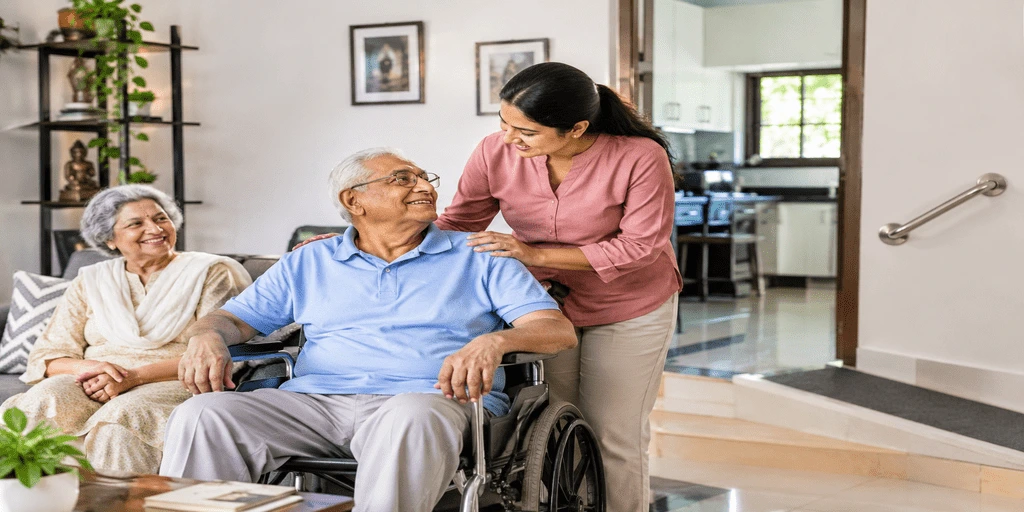
Many Indian apartments were not designed with wheelchair users in mind.
Narrow bathroom doors, tight corners, raised thresholds, and limited turning space can make independent movement difficult.
If a parent uses a wheelchair or walker, assess the entire travel route rather than checking one doorway.
Important questions include:
- Can the mobility aid (what does this mean?) pass through the main entrance?
- Is the bathroom doorway wide enough?
- Is there space to turn and approach the toilet?
- Can bedroom furniture be rearranged?
- Are thresholds or floor-level changes creating obstacles?
In some apartments, changing the door swing or removing a threshold may help.
More extensive alterations should be professionally assessed for structural safety, building rules, and practical suitability.
12. Assess Lift Access and Building Infrastructure
Accessibility does not end at the apartment door.
For parents living on an upper floor, the lift may be essential for attending medical appointments, shopping, or leaving the building safely.
Check whether:
- The building has a reliable lift.
- The lift can accommodate the resident’s mobility aid.
- The entrance to the lift is step-free.
- There is adequate lighting in shared corridors.
- Backup power is available where needed.
- Lift maintenance and emergency communication procedures are documented.
Families should also understand the building’s emergency evacuation arrangements for residents who cannot use stairs independently.
A wheelchair-accessible apartment on a high floor may still present major challenges if building access is unreliable.
13. Install an Accessible Emergency Communication System
An emergency communication arrangement (insert the right pic) is especially important for parents living alone.
A mobile phone may be helpful, but it is not always available when someone falls or suddenly becomes unwell.
Depending on the individual situation, families can consider an accessible emergency call button, a wearable alert device, or another reliable communication system.
Before choosing a product, determine who receives the alert and what happens next.
An emergency button is only useful if someone can respond.
Test the system regularly, confirm power and connectivity requirements, and ensure your parent understands how to use it.
14. Improve Balcony and Window Safety
Balconies can be pleasant spaces for older adults, but they should be assessed carefully.
Ensure that railings are secure, flooring is slip-resistant, and walking areas remain clear.
Avoid placing unstable stools or furniture near balcony edges.
Check that balcony doors are easy to operate and that thresholds do not create tripping hazards.
Windows should open and close without requiring excessive stretching or climbing.
Any structural changes to railings, windows, or balconies should follow applicable building requirements and professional guidance.
15. Plan for Future Mobility Needs
A parent who walks independently today may require a walking aid or additional assistance in the future.
When making major changes, consider whether the apartment can accommodate changing mobility requirements.
For example, a bathroom renovation should ideally allow enough usable space for assisted bathing or mobility equipment if required later.
Families should also consider whether daily assistance, physiotherapy, meal preparation, or other support could be arranged when necessary.
Planning ahead may reduce the need for repeated and expensive renovations.
Room-by-Room Apartment Accessibility Checklist
This checklist can help families identify areas that need attention.
| Area | Accessibility checks |
| Entrance | Easy door operation, safe threshold, adequate lighting |
| Living room | Clear walking paths, stable seating, no loose rugs |
| Bedroom | Suitable bed height, accessible storage, bedside lighting |
| Bathroom | Grab bars, safe flooring, suitable bathing and toilet arrangements |
| Kitchen | Reachable storage, easy-to-use controls, safe preparation area |
| Corridors | Clear passage, sufficient lighting, no trailing cables |
| Balcony | Secure railings, safe flooring, unobstructed access |
| Building | Reliable lift, accessible entrance, emergency procedures |
| Emergency arrangements | Available call system, response contacts, tested communication |
Families should repeat the assessment when there is a significant change in mobility, medical condition, or living arrangements.
Which Apartment Modifications Should You Prioritise First?
Not every family can renovate an entire apartment immediately.
The most sensible approach is to address the highest-risk problems first.
Priority 1: Immediate Safety Improvements
Start with changes that are relatively simple and can address obvious hazards.
These may include removing loose rugs, clearing walking routes, improving lighting, securing cables, and repairing damaged flooring.
Priority 2: Essential Accessibility Equipment
Depending on your parent’s needs, prioritise professionally installed bathroom grab bars, suitable seating, mobility aids, and emergency communication equipment.
Priority 3: Larger Structural Changes
More extensive changes may include bathroom redesign, doorway alterations, professionally designed ramps, and improvements to wheelchair access.
These projects should be planned with the assistance of appropriate professionals.
Do not spend money on major modifications until you understand whether the building itself can meet your parent’s mobility and emergency access needs.
How Much Does It Cost to Make an Apartment Senior-Friendly in India?
The cost of making an apartment accessible depends on its existing layout, the individual’s needs, material choices, equipment quality, and the extent of renovation.
Small improvements such as reorganising furniture and improving lighting may require limited spending.
Grab bars, bathroom modifications, specialised seating, and emergency systems involve additional costs.
Structural changes, including doorway alterations or complete bathroom renovations, may require more substantial investment.
Instead of relying on a general online cost estimate, request itemised quotations from qualified local professionals.
Compare the cost of installation, structural work, equipment, maintenance, and any future modifications.
Some apartment improvements may also require permission from the landlord, residents’ welfare association (RWA), apartment owners’ association, or building management.
For major changes affecting shared areas, structure, plumbing, or fire safety, obtain necessary approvals before work begins.
Special Considerations for Ageing Parents Living Alone
An accessible apartment can improve day-to-day safety, but physical modifications alone may not address every challenge.
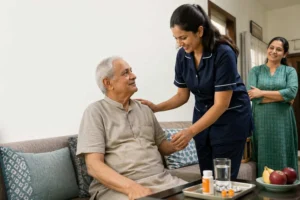
A parent living alone (pic repeated) may also need reliable arrangements for medication management, meals, housekeeping, healthcare appointments, or assistance during illness.
Families should consider whether their parent can:
- Contact someone during an emergency.
- Prepare and eat regular meals.
- Manage prescribed medications safely.
- Move between rooms without unsafe effort.
- Attend necessary medical appointments.
- Maintain personal hygiene and household cleanliness.
- Obtain help when their usual routine becomes difficult.
Technology, neighbours, relatives, and professional caregivers may provide different levels of assistance.
The right arrangement should reflect the senior’s preferences and actual support needs.
When Is an Accessible Apartment No Longer Enough?
Home modifications can help many seniors continue living independently, but they cannot replace medical care or personal assistance.
Some situations may indicate that more support is required.
Examples include repeated falls despite environmental improvements, difficulty managing basic daily activities, frequent medication errors, increasing confusion, or the need for substantial help throughout the day or night.
Families should also consider whether reliable assistance is available when an emergency occurs.
These challenges do not automatically mean a senior must move into assisted living.
A combination of professional home care, rehabilitation, and suitable equipment may be sufficient.
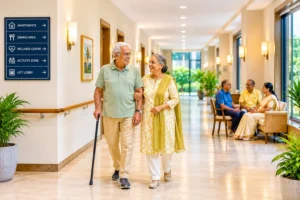
However, when the home environment cannot safely accommodate the person’s needs, exploring a purpose-designed senior living community (pic repeated) may be reasonable.
The decision should be made with the older adult’s involvement (pic repeated) and, when appropriate, advice from healthcare professionals.
Senior-Friendly Apartment vs Senior Living Community: What Is the Difference?
Both options can support comfortable ageing, but they offer different advantages.
| Factor | Modified family apartment | Senior living community |
| Familiar surroundings | Existing home and neighbourhood | Adjustment to a new environment |
| Accessibility | Depends on modifications and building design | Depends on the community’s actual facilities |
| Housekeeping and meals | Self-managed or separately arranged | May be included in the service package |
| Medical assistance | Arranged separately | May be available on-site or through service arrangements |
| Social interaction | Depends on personal connections and activities | May include organised community activities |
| Emergency response | Requires an individually arranged system | Depends on staffing and emergency protocols |
| Cost | Renovation, maintenance and separate services | Recurring fees and possible additional care charges |
Neither option is automatically better.
A senior who is comfortable at home with appropriate support may have no reason to move.
Someone who needs more frequent assistance or would benefit from an accessible living environment and community services may prefer a senior living facility.
The important consideration is whether the arrangement remains suitable as needs change.
Senior-Friendly Living at The Golden Estate, Faridabad
At The Golden Estate, we understand that comfort and accessibility become increasingly important as people grow older.
Located in Faridabad, Delhi NCR, The Golden Estate offers independent and assisted living accommodation designed around the everyday needs of senior citizens.
Our fully furnished suites and studios (insert the pic of a large suite and a large studio) incorporate senior-friendly features such as anti-skid flooring, grab bars, ergonomically selected furniture, and emergency call buttons.
These features are intended to make daily movement more convenient and provide residents with additional reassurance.
The community also offers 24/7 security, medical support (remove this pic), freshly prepared meals, housekeeping, laundry services, and recreational activities.
For seniors who require additional assistance, our team can explain the available assisted living arrangements and support services.
We recognise that moving away from a long-standing family home is a personal decision.
Families considering senior living can visit The Golden Estate, explore the accommodation (lots or Residents are no longer with us, so remove this), ask about accessibility arrangements, and understand which services are available before making a commitment.
Explore senior-friendly living at The Golden Estate or contact our team to arrange a visit.
Conclusion
Making an apartment more accessible for ageing parents is one of the most practical ways to support comfortable and independent living.
Small changes such as better lighting, clear walkways, safe bathroom fittings, and suitable furniture can make everyday activities easier.
For seniors with greater mobility challenges, more extensive modifications may be necessary.
The key is to assess the person’s actual needs, prioritise safety, and involve qualified professionals when structural changes or specialised equipment are required.
An accessible apartment should support independence without making the home feel unfamiliar or unnecessarily restrictive.
And as care needs change, families should remain open to reviewing whether the current living arrangement continues to provide the right level of comfort, safety, and support.
Frequently Asked Questions About Senior-Friendly Apartments
1. How can I make my apartment safe for elderly parents?
Start by removing tripping hazards, improving lighting, installing suitable bathroom grab bars, arranging stable furniture, and ensuring clear walking paths. Check lift access and emergency arrangements if the apartment is in a multistorey building.
2. What are the most important home modifications for senior citizens?
Common priorities include safer bathrooms, accessible entrances, slip-resistant floors, suitable seating, brighter lighting, and an emergency communication system. The most important modifications depend on the person’s mobility and health.
3. How can I make a small apartment wheelchair-accessible?
Assess doorway widths, turning space, furniture placement, bathroom accessibility, and thresholds. Rearranging furniture may help, but some apartments require structural alterations. A qualified accessibility professional can assess what is feasible.
4. Are grab bars necessary in bathrooms for elderly people?
Grab bars are commonly recommended for older adults who need support while using the toilet or bathing. They should be appropriately positioned and securely installed. Not every senior needs identical equipment.
5. What flooring is best for a senior-friendly apartment?
Flooring should be even, stable, easy to maintain, and provide suitable slip resistance. Bathrooms and other wet areas require particular attention. Loose rugs and uneven surfaces should be avoided.
6. Can I make a rented apartment senior-friendly?
Yes. Many improvements, such as rearranging furniture, removing loose rugs, and adding suitable lighting, may be possible without major renovations. Permanent modifications generally require the owner’s approval and may also be subject to building rules.
7. Is it better for ageing parents to live at home or in assisted living?
The answer depends on health, independence, social preferences, available family support, and the suitability of the existing home. Many seniors can continue living comfortably at home, while others may benefit from professionally supported accommodation.
8. How often should apartment accessibility be reviewed?
Review accessibility whenever there is a significant change in mobility, a fall, surgery, illness, or the use of a new mobility aid. Periodic checks can also help identify damaged fittings and emerging hazards.