A good hobby does something quietly powerful for an older person: it gives the day a shape, the mind a workout, and the heart a reason to look forward to tomorrow. Choosing the right top hobbies for elderly is one of the kindest things a family can do, because the alternative is far from harmless. The World Health Organization estimates that around 1 in 4 older people are socially isolated, and its Commission on Social Connection reported in June 2025 that loneliness is linked to more than 871,000 deaths a year. Set against numbers like those, an afternoon of painting, gardening, or singing with friends is not idle time at all. It is closer to preventive medicine.
This guide covers nine activities for senior citizens that keep the body moving and the mind engaged, with honest notes on starting each one safely. One idea threads through all of them, and we will say it plainly: the hobby that lasts is almost never the one done alone.
Why do hobbies matter so much in later life?
Hobbies matter because they protect the three things that fade fastest with age: memory, mood, and connection. The US National Institute on Ageing reports that older adults with an active lifestyle are less likely to develop dementia, heart disease, stroke, and cancer, and tend to live longer, feel happier, and cope better with setbacks.
Purposeful activity also replaces the structure that work and raising children once provided. For a retired school teacher in Faridabad, or a homemaker whose children have settled abroad, the move from a full, noisy house to a silent one can be genuinely disorienting, and a chosen hobby fills that space with something wanted rather than something lost.
Here is our position, without hedging: engaging activities for the elderly work best when they are social. A crossword solved alone keeps the mind busy. The same crossword puzzled over with three friends keeps the mind busy and lifts the mood. Keep that test in mind as you read on.
Top Hobbies for Elderly to Stay Active, Healthy, and Happy
Here is a quick-glance summary of nine hobbies to keep seniors active, followed by the detail.
Hobby | Main benefit | Easiest safe start
Gardening | Gentle exercise and calm | Waist-high pots of tulsi and marigold
Yoga and light exercise | Better balance, fewer falls | Chair yoga, cleared with a doctor
Reading and book clubs | Sharper memory and focus | Large-print books or audiobooks
Music | Lifts mood and long-term memory | Listening and singing along first
Painting and crafts | Focus and fine motor skills | Water-based paints, a well-lit table
Games and puzzles | Mental agility | Carrom, cards, large-piece sets
Cooking and baking | Purpose and sharing | Seated prep of a family recipe
Storytelling and memoirs | Reflection and legacy | One recorded memory a week
Community volunteering | Belonging and longer life | One short weekly commitment
1. Gardening
Digging, watering, and pruning are gentle exercises, morning sun supports better sleep, and watching a seed become a marigold gives a real sense of nurture. Start safely with raised beds or waist-high pots so there is no bending, garden in the early morning or evening to dodge the Delhi-NCR heat, and choose forgiving plants like tulsi, curry leaves, methi, or marigold. Keep a shaded chair and water close by.
2. Yoga and light exercise
Yoga is India’s own gift to healthy ageing. Gentle asanas improve balance and flexibility, which means fewer falls, while pranayama breathing eases anxiety and poor sleep. Begin with chair yoga and supported standing poses for 15 to 20 minutes, and clear any new routine with a doctor or physiotherapist first, especially where blood pressure, joints, or the heart are involved. Tai chi and a daily walk are equally kind.
3. Reading and book clubs
Reading keeps vocabulary, imagination, and empathy alive at almost no cost. Tired eyes are no barrier: large-print editions, adjustable-font e-readers, and audiobooks all help, and regional-language titles often bring the most comfort. The real reward comes when reading turns social. A weekly book club, even four members strong, turns a solitary pleasure into a conversation everyone looks forward to.
4. Music
Music reaches parts of the ageing mind that little else can. The National Institute on Ageing notes that creative activities such as music and dance can help older adults living with memory problems, which is why a familiar bhajan or old film song can light up a face at once. Start by listening and singing along, move on to antakshari with friends, and, for the ambitious, relearn the harmonium or tabla.
5. Painting and crafts
A brush or a ball of wool asks hand and mind to work together, sharpening focus and fine motor control. Watercolours, madhubani, warli, rangoli, knitting, and crochet all suit older hands and need no prior training. Use water-based paints, thick brushes, and strong light, keep sessions short, and display the finished work. Pride in a small creation is its own reward.
6. Gentle games and puzzles
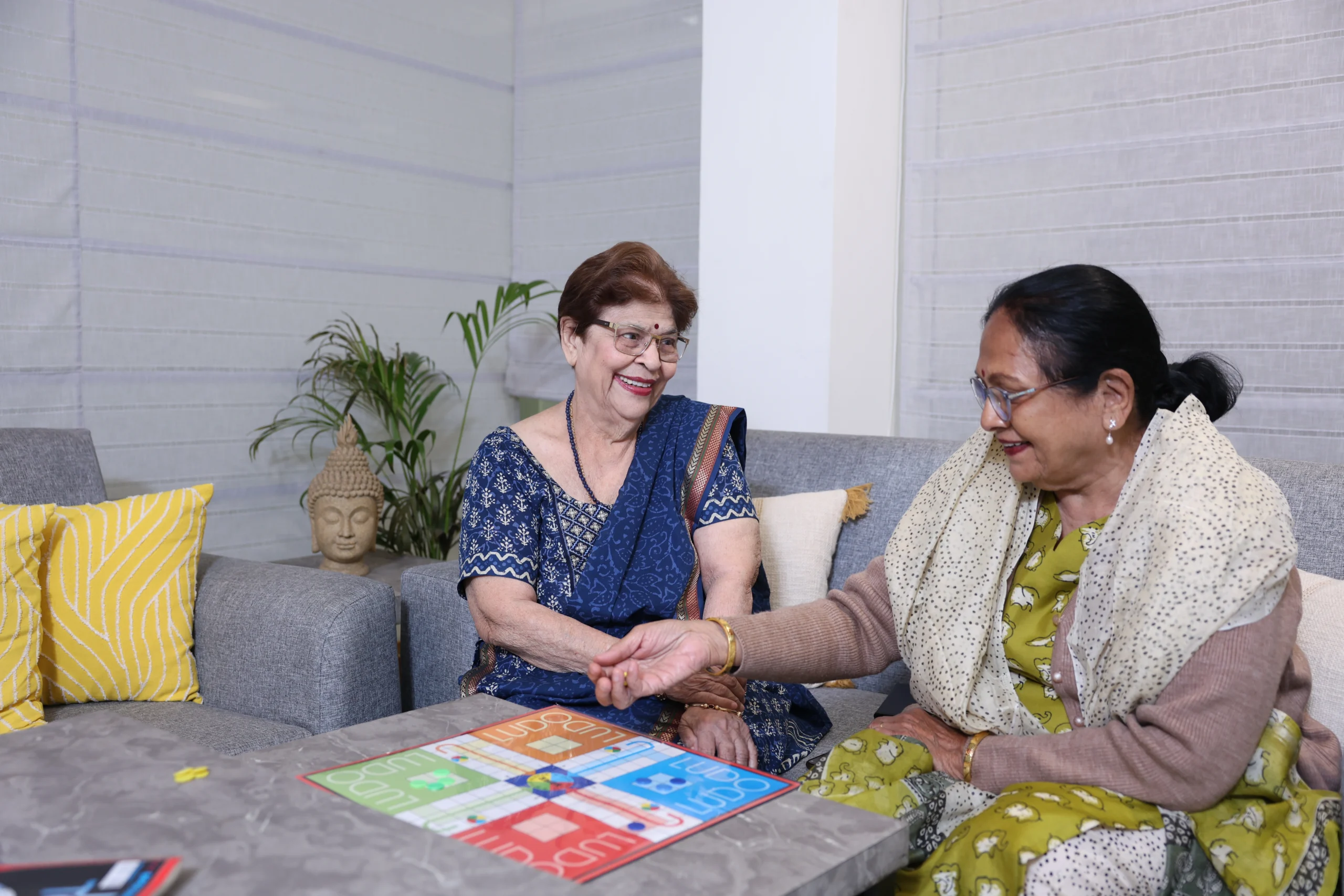
Games are mental agility disguised as fun. Chess, carrom, rummy, Sudoku, crosswords, and jigsaws stretch attention, memory, and strategy, with the added spice of friendly competition. Pick large-piece jigsaws and large-print cards for comfortable eyes and hands. A standing carrom or rummy evening each week exercises the brain and cements friendships in a single sitting.
7. Cooking and baking
For anyone who once ran a kitchen, cooking restores purpose along with wonderful smells and tastes. Making a long-loved recipe, or teaching it to a grandchild, turns a chore into a gift. Keep it safe with seated preparation, pre-chopped ingredients, and no heavy lifting or long spells at the stove. Baking a familiar sweet with a companion nearby is a cheerful place to begin.
8. Storytelling and writing memoirs
Every older person carries a library of stories, and setting them down is deeply rewarding. Writing a memoir sharpens memory, invites reflection, and leaves grandchildren something no shop can sell. If writing tires the hand, voice notes on a phone work just as well, and relatives can help by interviewing their elders one memory at a time. A single story a week soon becomes a life on the page.
9. Community volunteering
Giving back may be the most powerful hobby of all. The National Institute on Ageing links volunteering and meaningful activity to greater happiness and a longer life, and the feeling of being needed is priceless. A retired teacher can coach neighbourhood children, a good cook can help at a temple or gurudwara langar, and almost anyone can assist a local NGO. Begin with one small weekly commitment, ideally alongside a friend.
How a senior living community turns hobbies into friendships
Every hobby above grows richer in company, and that companionship is exactly what a good senior living community is built to provide. A garden tended with neighbours, a book club with real members, an antakshari session with a roomful of voices: these are ordinary in a community and rare in an empty flat.
The Golden Estate has been practising this quiet art in NIT Faridabad, Delhi NCR, since March 2013. Residents enjoy recreational activities, a clubhouse, a spa and gym, and freshly prepared meals inside a fully gated community, while an in-house physiotherapist and psychologist keep pursuits like yoga and light exercise supervised and safe. As a member of the Association of Senior Living India, the community builds its days around these senior citizen activities rather than leaving them to chance. You can see the rhythm of it in a typical day at The Golden Estate (https://thegoldenestate.com/timeline/), and understand what draws families on the why-choose-us page (https://thegoldenestate.com/why-us/).
This is the multiplier promised at the start. The same painting class, the same carrom evening, the same morning of yoga simply carries more joy, and more safety, when there are people to share it with.
Frequently asked questions
What are the top hobbies for elderly people with limited mobility?
Seated hobbies work beautifully: container gardening at waist height, painting, knitting, card and board games, music, memoir writing, and chair yoga all keep a person engaged without strain.
How do hobbies help seniors living with early memory loss?
Familiar and creative activities help most. The National Institute on Ageing points to music and dance as supports for older adults with memory problems, so singing old songs or leafing through photo albums can reach long-term memory and lift the mood on hard days.
What are good hobbies for retired people in India?
Culturally rooted ones tend to stick: tending tulsi and marigold, bhajan or antakshari sessions, carrom and rummy evenings, rangoli and madhubani art, yoga and pranayama, and volunteering through a temple, gurudwara, or neighbourhood NGO.
How can families encourage a parent who feels too old for hobbies?
Start small and social. Invite rather than instruct, keep the first session to twenty minutes, include a friend, and choose something they once loved. Company and a gentle beginning persuade better than any lecture.
The years worth looking forward to
The happiest later life is rarely the most comfortable one; it is the most engaged one. Nine hobbies, one honest rule: keep them active, keep them safe, and above all keep them shared. That is how the golden years earn their name.